
Inside Our Retaining Wall Project with Steve Stickley, President of Plant and Design (Maryland Division)
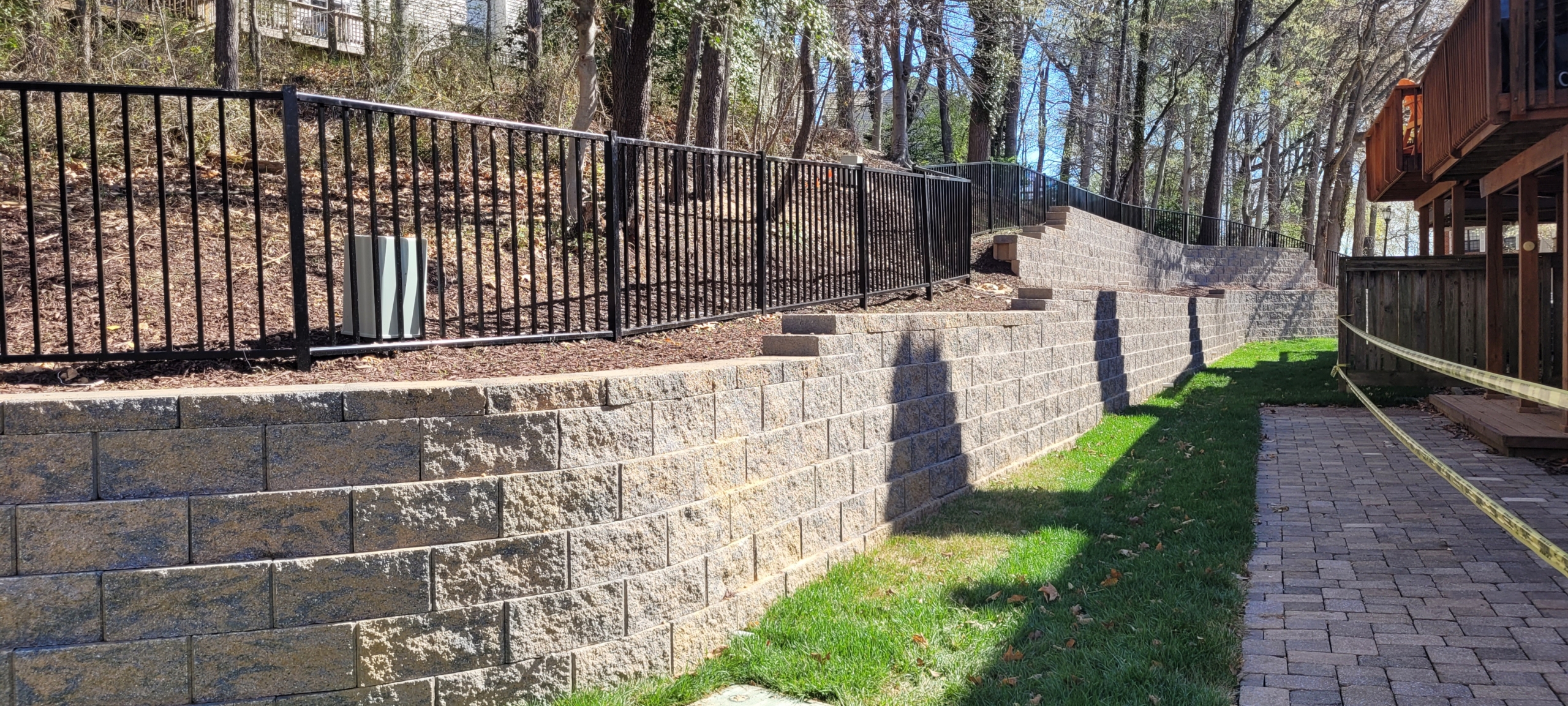
At McFall and Berry, we believe landscaping should not only be beautiful but also functional. Earlier this year, our Maryland team completed a stunning retaining wall project that perfectly blends both. Designed to stabilize a sloped area while enhancing curb appeal, this wall became a standout feature in the community it serves. We documented the process through weekly photo updates (which you may have seen on our socials!) to show how a project like this evolves from start to finish.

The project was led by Steve Stickley, Head of the Plant and Design Division for Maryland at McFall and Berry and a Certified Segmental Retaining Wall Installer with over 12 years of experience. We spoke with Steve about what made this wall so important not only to the team but to the five homes it helped protect.
“The purpose of this project was to replace a deteriorated pressure-treated timber wall and stabilize the slope in the rear of five residences,” Steve explained. Walls like the one we replaced are common in older communities, built with materials that typically last only 25–30 years. “Replacing these walls has become a vital service to our clients over the years,” he added. McFall and Berry has long been at the forefront of retaining wall innovation. “We were one of the first companies thirty-five years ago to use segmental wall systems to replace pressure-treated materials,” Steve shared.
Today, segmental wall materials offer a much longer lifespan, with warranties of 20 years or more in some cases. Steve emphasized that the primary focus of any wall project is structural integrity. “Walls of this scope are designed by professional engineers for their structural integrity first, and aesthetics second,” he said.
Fortunately, manufacturers have come a long way in creating materials that are not only durable but also visually appealing. Of course, building so close to occupied homes comes with its own set of challenges. “Proper and diligent planning prior to the project is the most critical part of the process,” Steve noted. Ensuring resident safety and minimizing disruption were key goals throughout the build.
Retaining walls do more than just hold back soil. They’re critical in preventing erosion, managing drainage, and ensuring the structural integrity of sloped land. In both commercial and residential landscapes, they allow for better use of space making steep or uneven areas usable, safe, and visually cohesive.
A well-designed retaining wall can:
- Prevent erosion and soil runoff
- Improve water drainage
- Create level areas for planting or recreational use
- Enhance property value with clean, structured design
Beyond structure and design, retaining walls serve a vital purpose on many properties. “The main purpose of retaining walls is to create usable space,” Steve explained. In this case, the original builder had cut into a hillside to create room for homes, and the wall was essential to stabilizing that slope above the residences. When asked what advice he’d offer someone considering a retaining wall, Steve’s response was simple: “Consult with a professional. Communicate the goals you want to achieve, and from there, the proper design and materials can be selected and planned.”
As for what’s next in wall design? “The trends are for more attractive, durable, and more creative material being developed,” he shared. With more options available than ever before, retaining walls are becoming as beautiful as they are practical.
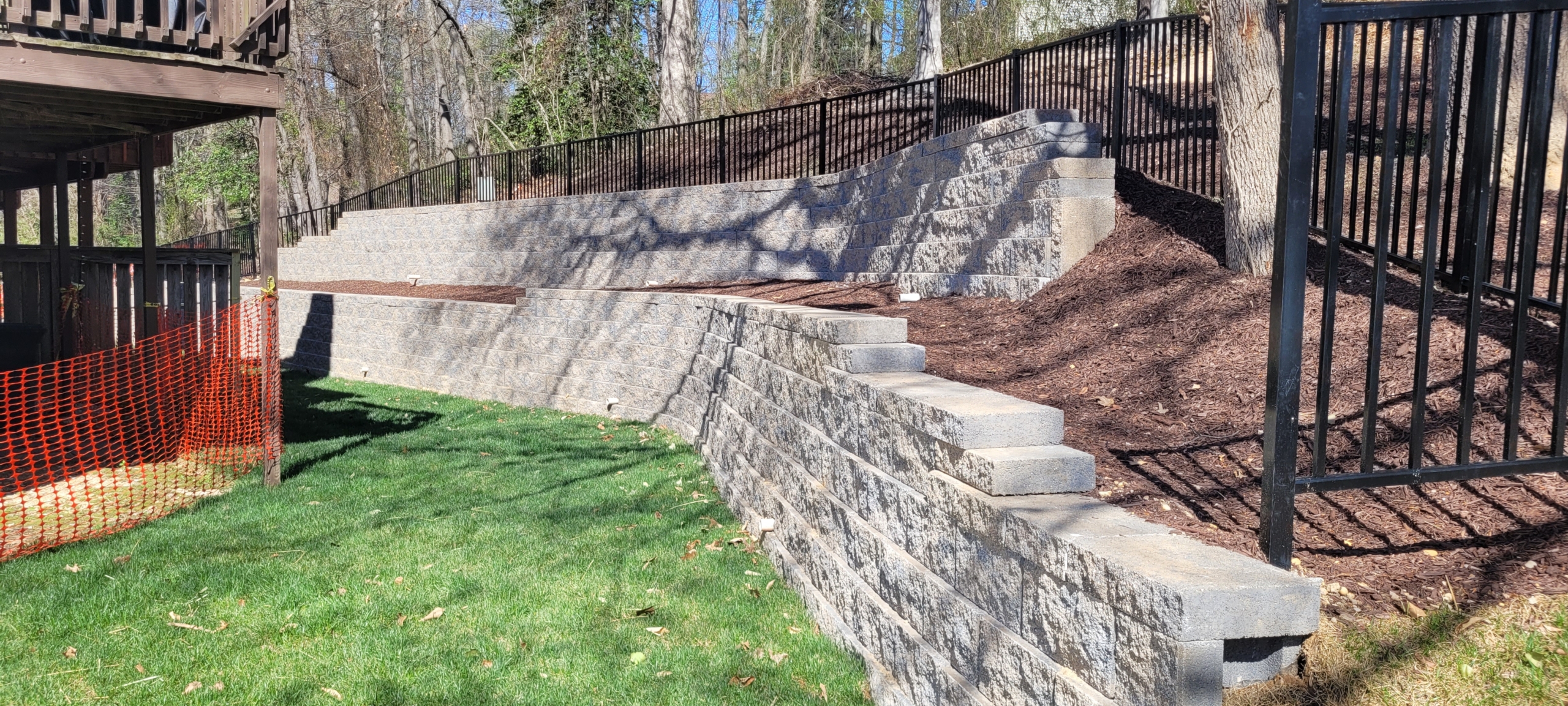
Ready to Reinforce Your Landscape?
At McFall and Berry, we’ve been solving slope, erosion, and structural challenges for decades. Whether you’re dealing with an aging wall or considering a new installation, our design-build experts like Steve are here to help your property look its best and stay structurally sound for years to come.
Contact us today to schedule a consultation or learn more about our retaining wall solutions.
Retaining Wall FAQs
What is a segmental retaining wall (SRW) and how does it work?
A segmental retaining wall (SRW) is a modular retaining wall system designed to hold back soil, often used to manage slopes and improve the usability of outdoor spaces. These walls are built as gravity systems, meaning they rely on the weight of the blocks to help keep soil in place. Unlike poured concrete walls, SRWs are made of dry-stacked, interlocking units that do not require mortar.
To perform effectively over time, SRWs rely on a combination of design, reinforcement (when needed), and proper drainage.
How it works:
- Gravity (Weight of the Wall): The weight of the stacked blocks helps resist the pressure of the soil behind the wall. Each layer is set slightly back from the one below, which increases stability. The interlocking design of the blocks also helps prevent movement over time.
- Soil Reinforcement:For walls taller than three to four feet, gravity alone may not provide enough stability. In these cases, geogrid—a high-strength synthetic mesh—is used to create a reinforced soil mass. The geogrid is placed between layers of block and extended into the soil behind the wall, helping strengthen the overall structure.
- Drainage: Proper drainage is critical to the long-term performance of any retaining wall. If water builds up behind the wall, it can create pressure that leads to failure. To prevent this, crushed stone is placed behind the wall to allow water to flow downward, and a drain pipe at the base carries water away safely.
What are the advantages of an SRW compared to poured concrete walls?
Wall blocks are stacked without mortar so the individual units can move independently. This allows the wall to subtly flex and adjust without cracking or losing its structural integrity. The wall blocks have enough flexibility to move with the earth while being heavy enough to hold it back.
Poured concrete walls require a deep footing below the frost line, whereas an SRW only requires a compacted gravel base layer, saving time and money.
How does a segmental wall address common retaining wall problems?
In cold climates, the freeze-thaw cycle can cause concrete walls to crack. Because SRWs are dry-stacked, the units can shift independently as the soil expands and contracts. Their gravel foundation doesn’t settle like concrete footings do and the cantilever effect of the stacked concrete blocks prevents the wall from bowing in the middle.
What site and design considerations need to be taken into account?
SRWs are highly versatile and can be integrated into a wide range of landscape designs. They can accommodate tight curves, corners, and elevation changes, and work seamlessly with features like walkways, patios, and planting areas.
They can also serve multiple functions such as built-in seating, and are available in a variety of materials, including natural stone, concrete, and sustainable options like recycled materials.
In addition to providing structural support, SRWs can create usable space by transforming previously sloped or underutilized areas into functional parts of the landscape.
What happens during a retaining wall installation?
Retaining wall construction is a five-step process that includes:
- Proper design and engineering
- Excavation and base preparation with tightly packed crushed stone
- Setting the first row of blocks and ensuring they are level front-to-back and side-to-side
- Drainage and backfill with more crushed stone
- Stacking subsequent rows, ensuring the interlocking pins or lips are engaged
- Capping the final stones with masonry adhesive and finishing the area behind the top of the wall with topsoil and mulch
What is the typical cost for an SRW project?
The cost for a professionally installed SRW typically ranges per square foot of wall face, depending on the complexity of the project.