
What Every Property Manager Should Know

An interview with Jason Crouse, Tree Division Manager – MD/ ISA Certified Arborist
Summer storms are inevitable across Maryland, Northern Virginia, and Washington, D.C. High winds, heavy rain, and saturated soil can quickly turn healthy-looking trees into serious hazards. While no one can prevent severe weather, communities can significantly reduce their risk through proactive tree care and a clear emergency response plan.
After more than 36 years in the commercial tree care industry – including 25 years leading McFall & Berry’s Maryland Tree Division – I’ve learned that emergency tree care doesn’t begin after the storm. It begins months before the first warning is issued.
Storms Reveal Existing Problems
One of the biggest misconceptions about emergency tree service is that storms are solely responsible for tree failures. In reality, storms often expose issues that have been developing for years.
“The wind gets blamed,” Jason explains, “but a lot of the damage starts underground with saturated soil or in trees that haven’t been properly maintained.”
The most common causes of tree failure include:
– Dead or hazardous trees
– Improper pruning
– Dense canopies that catch excessive wind
– Saturated soil that weakens root systems
– Deferred maintenance
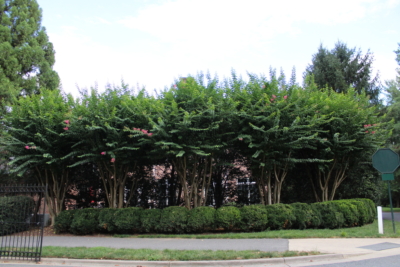
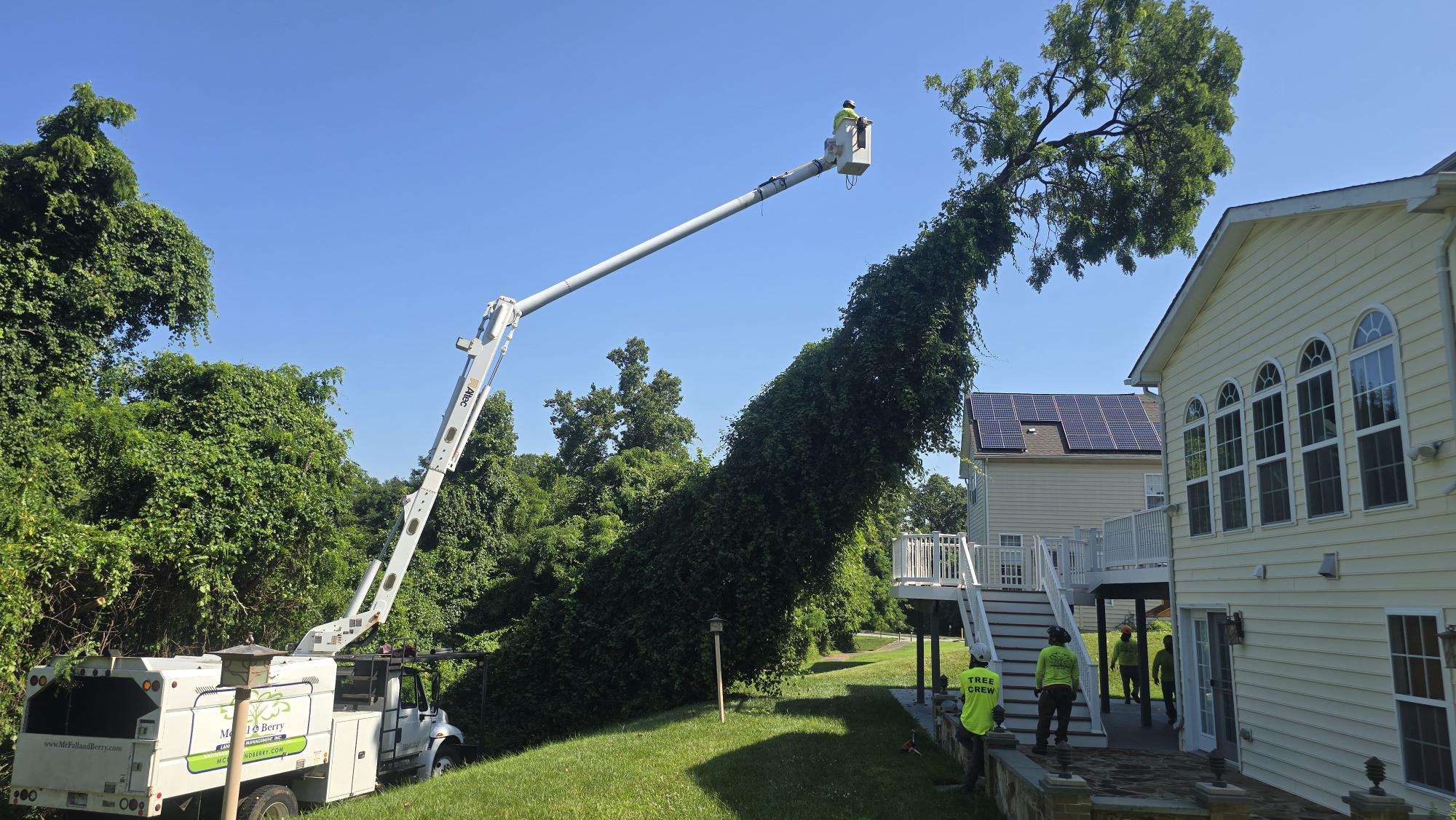
When trees are properly pruned, wind can move through the canopy more effectively, reducing stress on the tree. Trees that haven’t been maintained become much more susceptible to broken limbs, split trunks, and complete failure during severe weather.
Certain species are naturally more vulnerable as well. Bradford pears, white pines, Leyland cypress, and other fast-growing species often experience failures during summer storms because of weak branch structure or shallow root systems.
Don’t Wait Until the Storm Is Coming
One of the most common situations we encounter is receiving calls after severe weather has already been forecast.
Property managers often ask if we can remove vulnerable trees immediately before a storm arrives. Unfortunately, by that point, crews are already preparing for emergency response, and it’s often too late to address preventative work safely.
Communities that perform routine inspections and remove hazardous trees before storm season consistently experience fewer emergencies.
“People call when the storm is coming because they’re scared,” Jason says. “But if we recommended removing that tree a year ago, we can’t stop everything we’re doing because now it’s an emergency.”
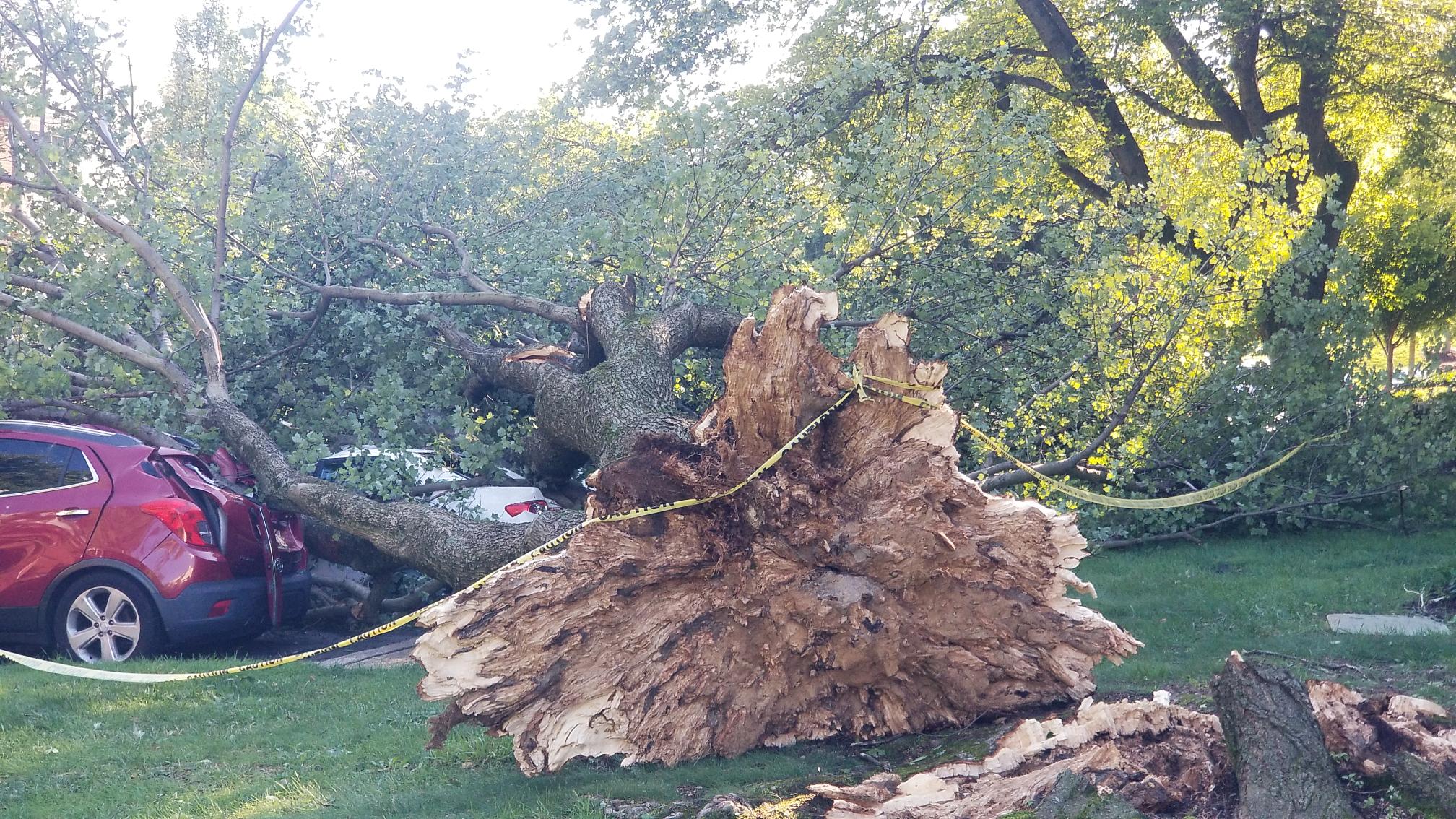
Preventative tree removal is also significantly less expensive than emergency response. Once a tree falls, costs increase because crews must be redirected immediately, specialized equipment may be required, and additional hazards often exist around buildings, vehicles, and utilities.
What Property Managers Should Do Immediately After a Storm
Fast, organized communication allows emergency crews to respond much more efficiently.
“If I know about it Friday night, I can start planning. If you wait until Monday, I’ve already got another schedule.”
If your property experiences storm damage:
1. Contact your tree service provider immediately.
2. Send clear photographs of the property damage.
3. Explain the level of urgency.
4. Include the exact location or building address.
5. Provide approval to begin emergency work as quickly as possible.
6. Move vehicles away from felled trees whenever it is safe to do so.
7. Let residents know that emergency crews have been contacted and that response is underway.
“The more information I have before I leave the shop, the faster I can get the right equipment and the right crew to your property.”
Know What Is – and Isn’t – an Emergency
Not every fallen branch requires immediate emergency response.
If a limb falls into an open grassy area without creating a safety hazard, it may be scheduled after higher-priority calls.
Situations requiring immediate attention include:
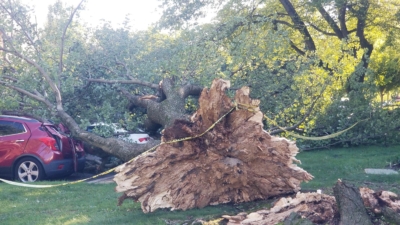 – Trees on buildings
– Trees blocking entrances or emergency access
– Trees on occupied vehicles
– Trees creating immediate safety hazards
– Trees involving utility lines
Understanding the difference helps emergency crews focus first on situations that present the greatest risk to people and property.
As Jason puts it, “If a branch falls in the grass, it can wait. If it’s blocking someone’s front door or sitting on a car, that’s where we’re going first.”
Safety Comes Before Cleanup
One of the biggest mistakes people make after a storm is assuming the danger has passed.
Residents often walk under damaged trees, allow children to play on fallen trees, or approach branches that appear stable.
“We’ve pulled up to jobs where kids are climbing all over a fallen tree,” Jason recalls. “They don’t realize that the tree may not be finished falling.”
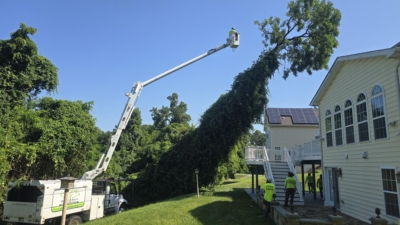
Always stay away from:
– Trees touching power lines
– A tree leaning against another tree
– Trees leaning on buildings
– Trees that are partially broken but still standing
“If there’s a power line involved, don’t touch it. The utility company has to tell us it’s safe before we can even begin.”
Preventative Tree Care Is an Investment
Many communities postpone tree work because of budget concerns. Ironically, delaying maintenance often results in much higher costs later.
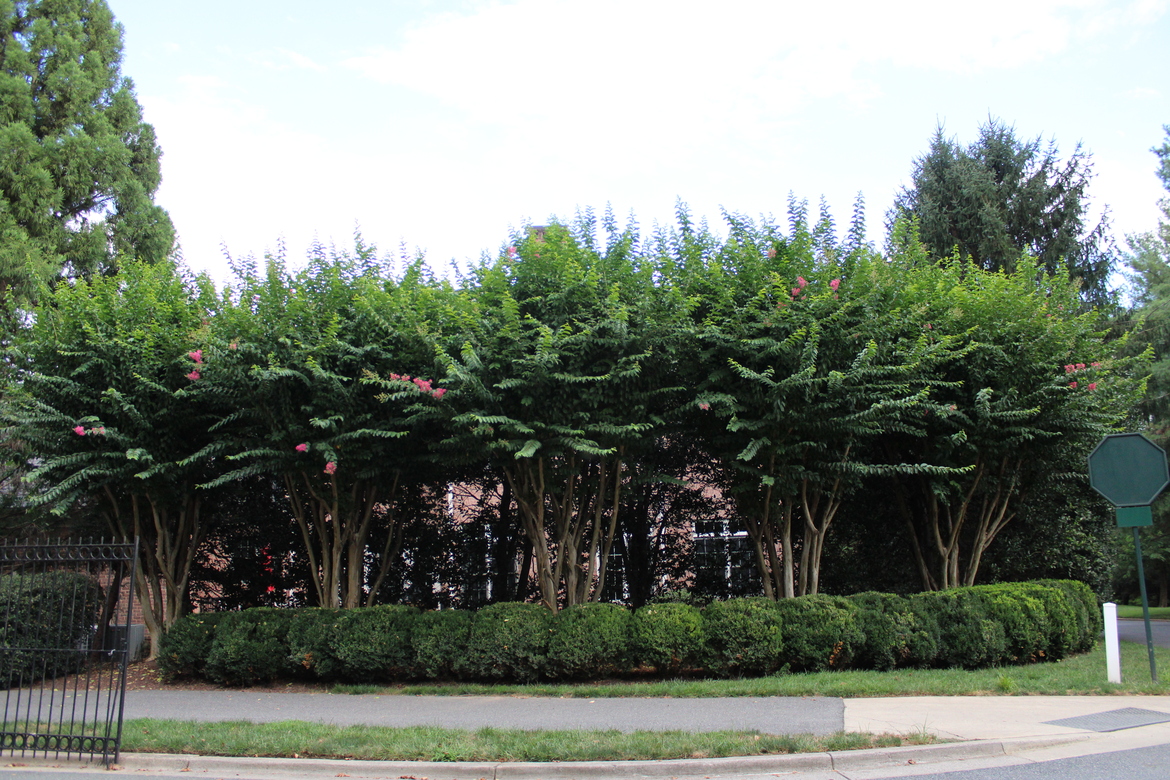
Routine pruning every three to five years helps reduce storm damage, improves tree structure, removes hazardous limbs, and extends the life of mature trees.
Emergency removals require additional labor, specialized equipment, and immediate scheduling, making them considerably more expensive than planned maintenance.
As Jason often explains to clients, “It’s almost always cheaper to remove a hazardous tree than to clean up felled trees.”
Preventative care isn’t simply about keeping trees attractive. It’s about protecting residents, vehicles, buildings, sidewalks, and community infrastructure.
How McFall & Berry Prepares Before the Storm
Emergency response begins well before the first phone call.
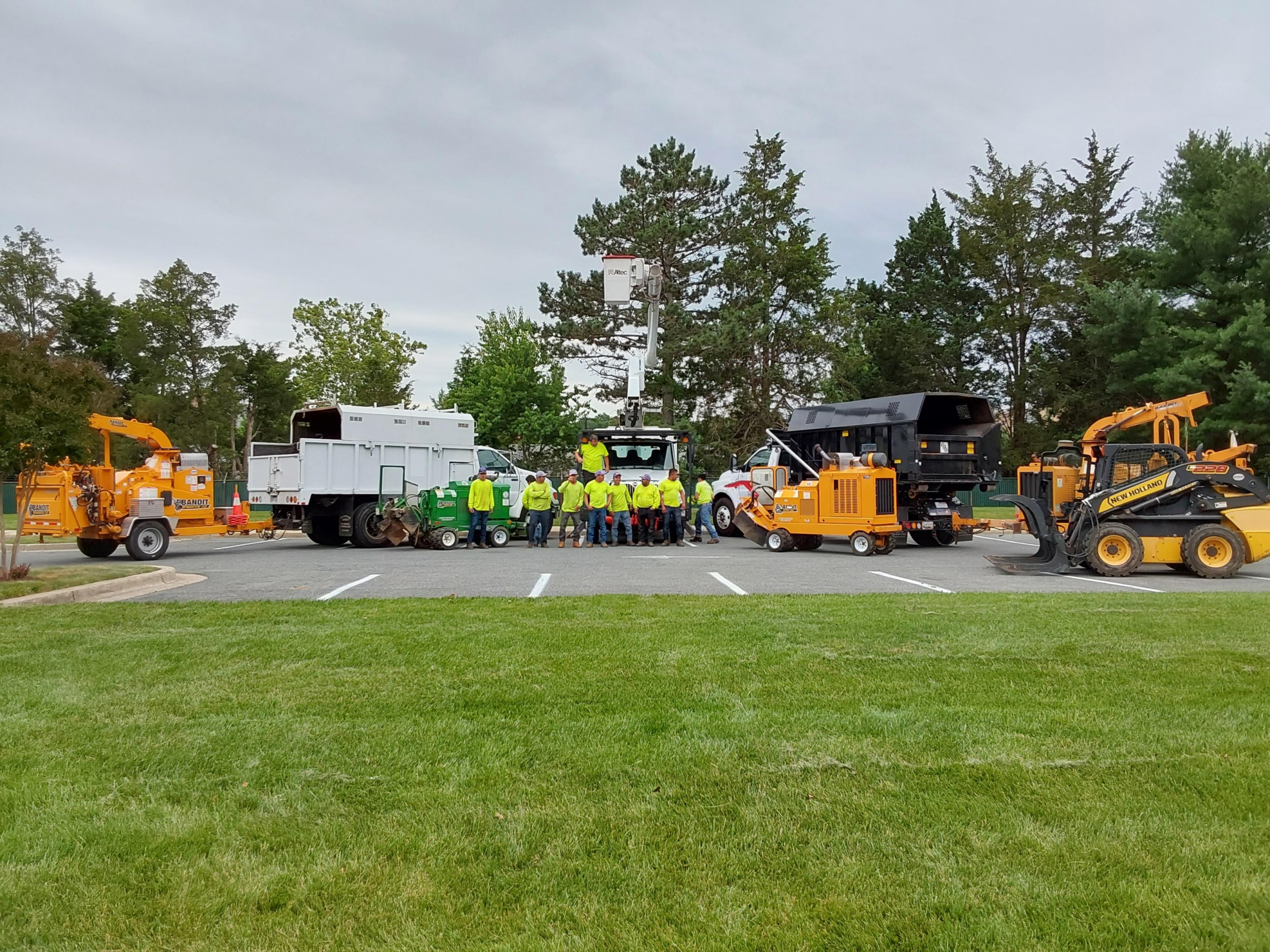
When severe weather is forecast, our professional tree service experts begin preparing in advance by fueling equipment, staging trucks, checking safety gear, charging communication devices, and ensuring crews are ready to respond as soon as conditions allow.
Depending on the situation, chainsaws and essential equipment may already be positioned with crew members so they can respond without first returning to the shop.
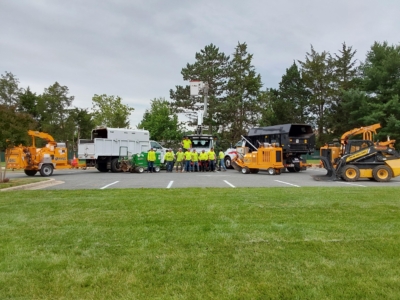
Once storms pass safely, our priority is getting experienced personnel onsite quickly to assess conditions, documenting tree damage, coordinating equipment, and to begin making affected areas safe.
“Our trucks are fueled, our equipment is ready, and my crews know to keep their phones on. Preparation starts before the storm ever gets here.”
Every storm is different, but preparation allows us to respond efficiently while keeping both our crews and community residents safe.
A Final Thought for Property Managers
If there’s one piece of advice Jason wants every property manager to remember before the next round of summer storms, it’s simple:
“Don’t hesitate. Don’t wait. If something happens, make the call. I’d rather know about it right away than find out three days later.”
Proactive tree care protects your residents, reduces liability, lowers long-term costs, and helps your community recover faster when severe weather strikes.
When storms arrive, preparation makes all the difference.
McFall and Berry provides comprehensive professional landscaping services for commercial residential properties in greater Washington D. C. Our certified arborists have deep expertise maintaining healthy trees and, when necessary, providing safe tree removal services. Our services include tree trimming, stump grinding, and debris removal. Customer satisfaction is our highest priority. Give us a call to schedule an appointment to assess tree health on your properties.